
Rides and deliveries in Algeria, at a price both sides agree on.
Overview.
Riders, senders, drivers and couriers
People in Algerian cities who need a car or want a parcel moved across town, and the VTC drivers and moto couriers who earn from it, mostly paid in cash.
Prices are negotiated, trust is thin
Riders expect to discuss the price, drivers want the closest jobs, and nobody wants a trip that hangs with no driver. Parcels need proof that they reached the right person.
Negotiation with rules, matching by distance
Server-issued prices with an allowed range, offers and counter-offers in real time, waves of the closest drivers, live tracking, in-app chat, and delivery proof by secret code, photo or signature.
Screens.
A ride or a parcel, from one screen
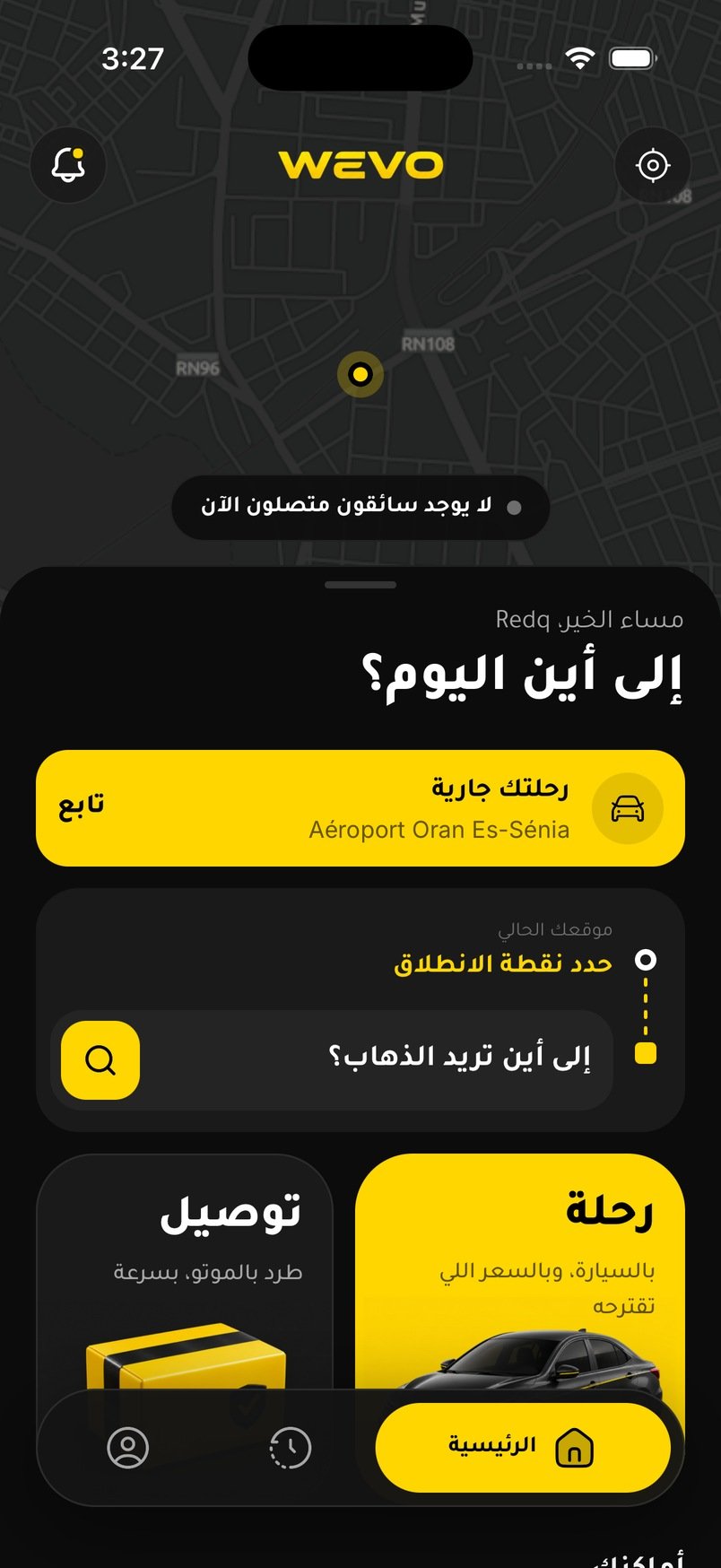
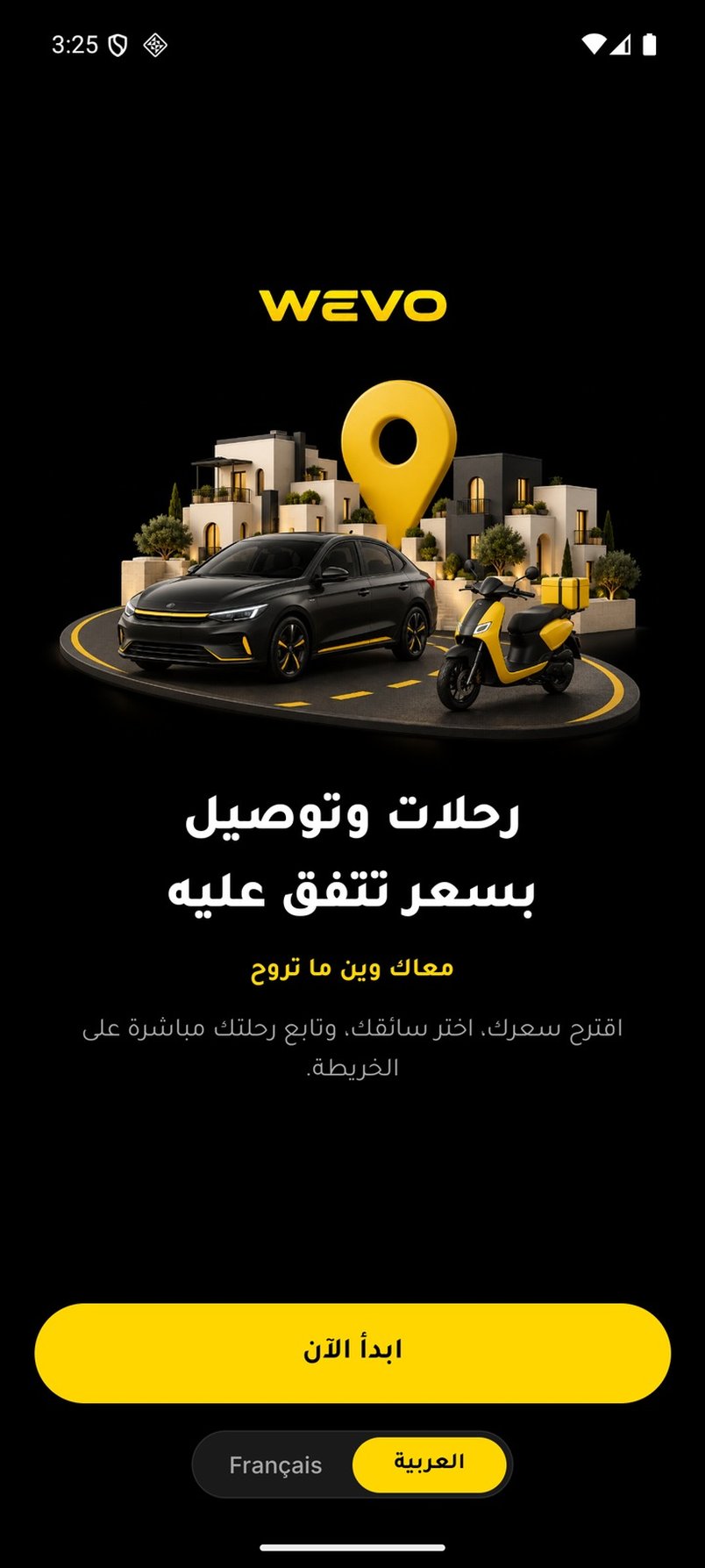
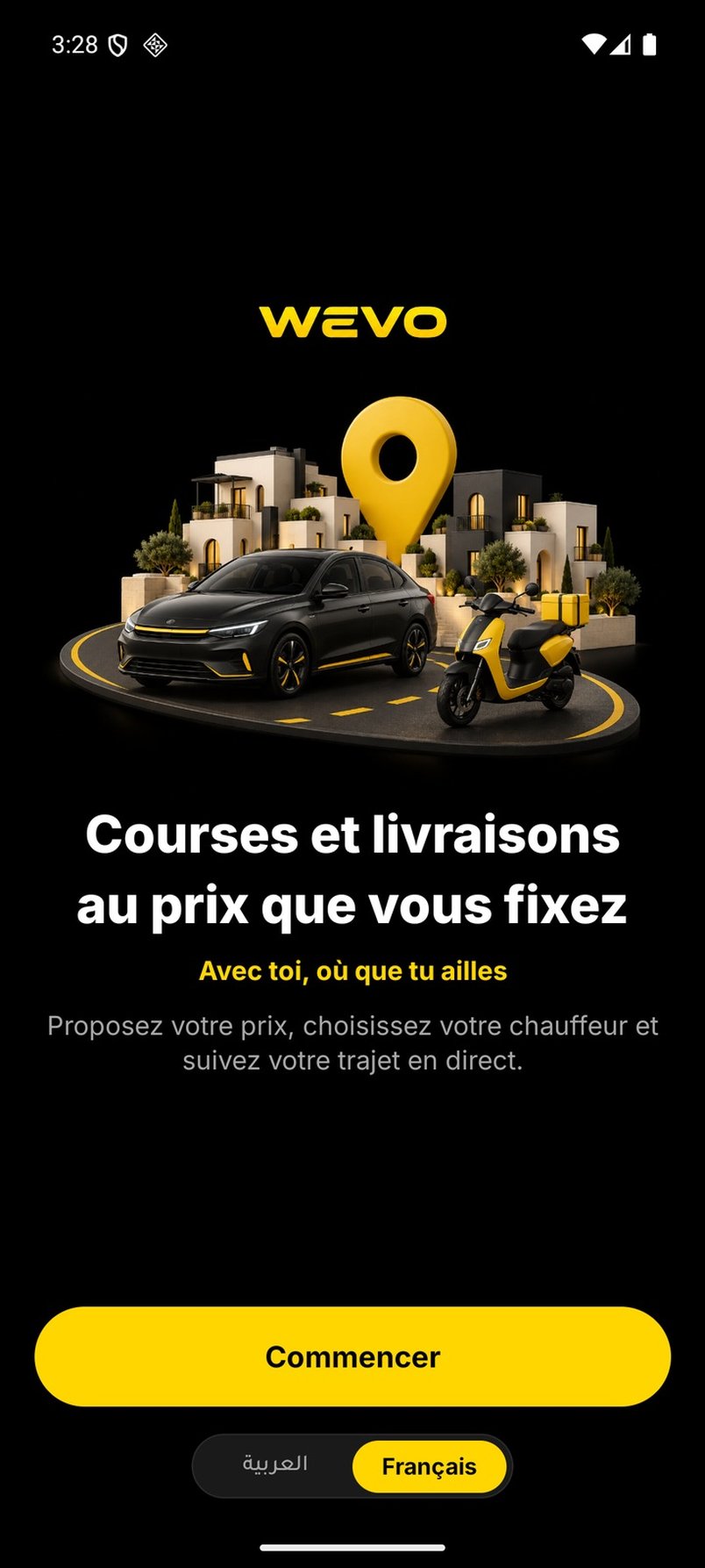
The client picks a ride or a delivery, sees the trip in progress at the top, and starts from their real GPS position. The whole app runs in Arabic (right to left) or French.
- 1Real position, namedThe pickup starts at the phone's GPS fix, and the app names the spot from the nearest landmark or street.
- 2Only where WEVO operatesService is limited to seven wilayas (Alger, Oran, Constantine, Sétif, Annaba, Blida, Tlemcen). Outside them, ordering and going online are refused by the database.
- 3Saved placesHome, University and Work are one tap away, and any past trip can be booked again.
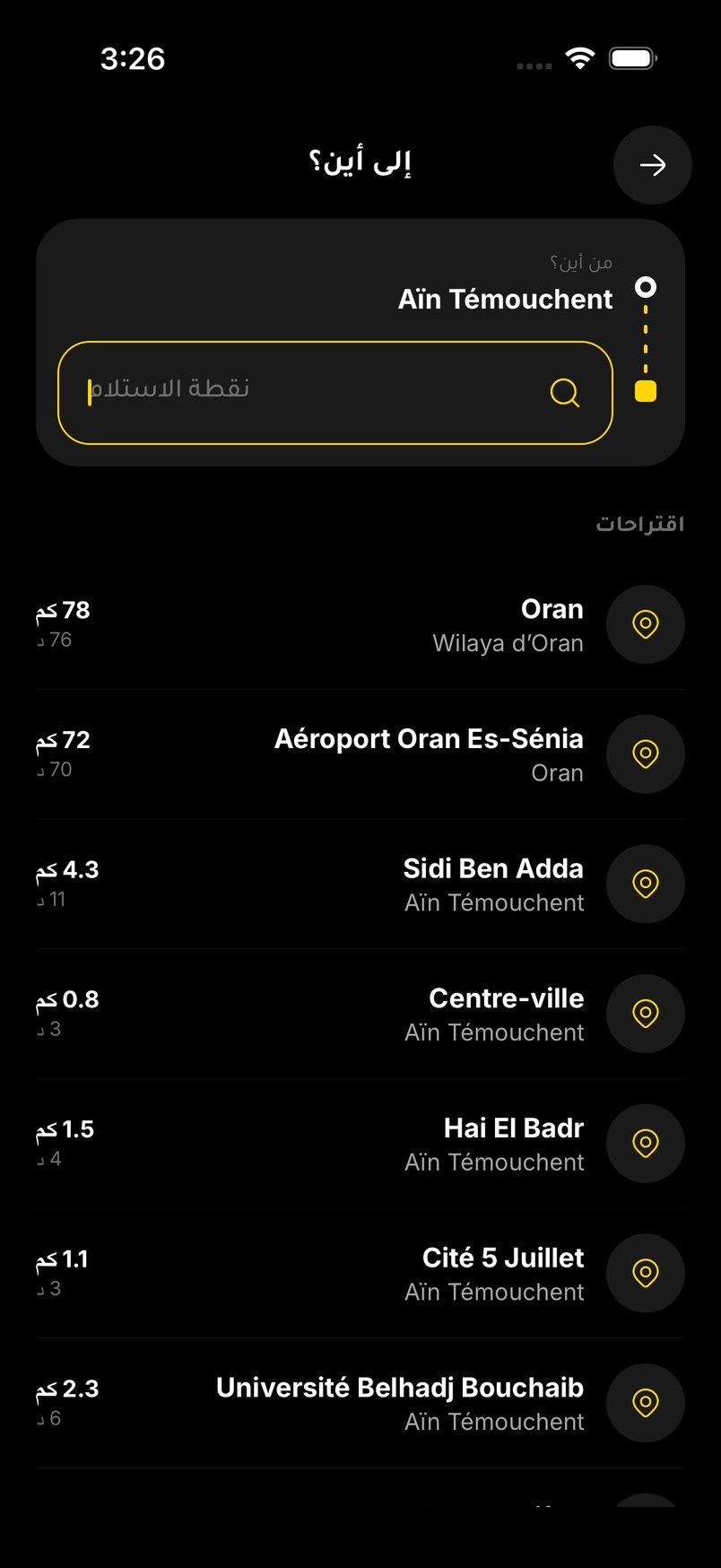
Place search that knows Algeria
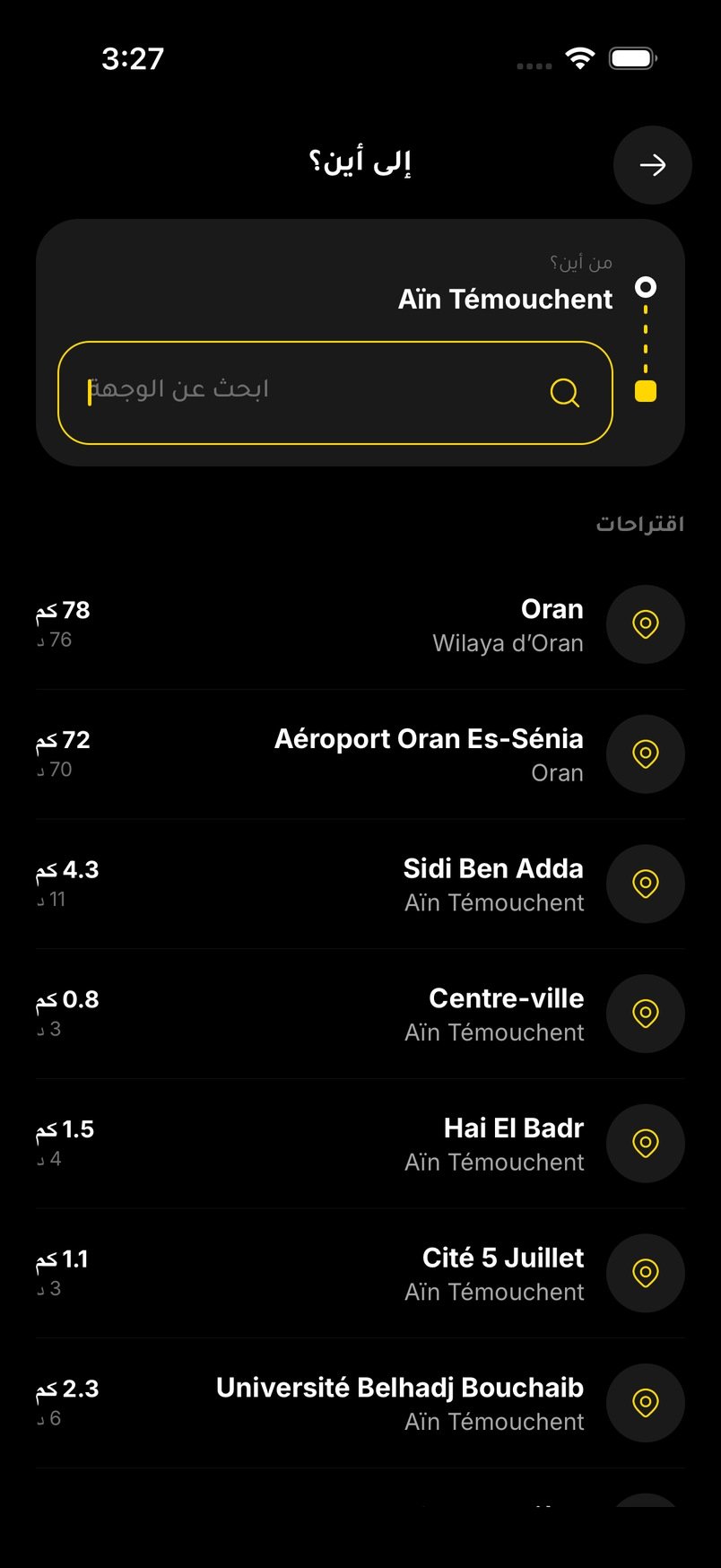
WEVO's own places come first, then OpenStreetMap results, limited to Algeria and ranked so that places within 20 km of the user come first.
- 1Cached answersSearch and reverse-geocoding answers are cached for seven days, so the same street is not looked up twice.
- 2Light on the networkThe app waits 300 ms after typing stops before searching, and falls back to WEVO's own places when offline.
- 3Pick it on the mapIf search can't find the spot, the client drops a pin on the map instead.
A real price from the real road distance
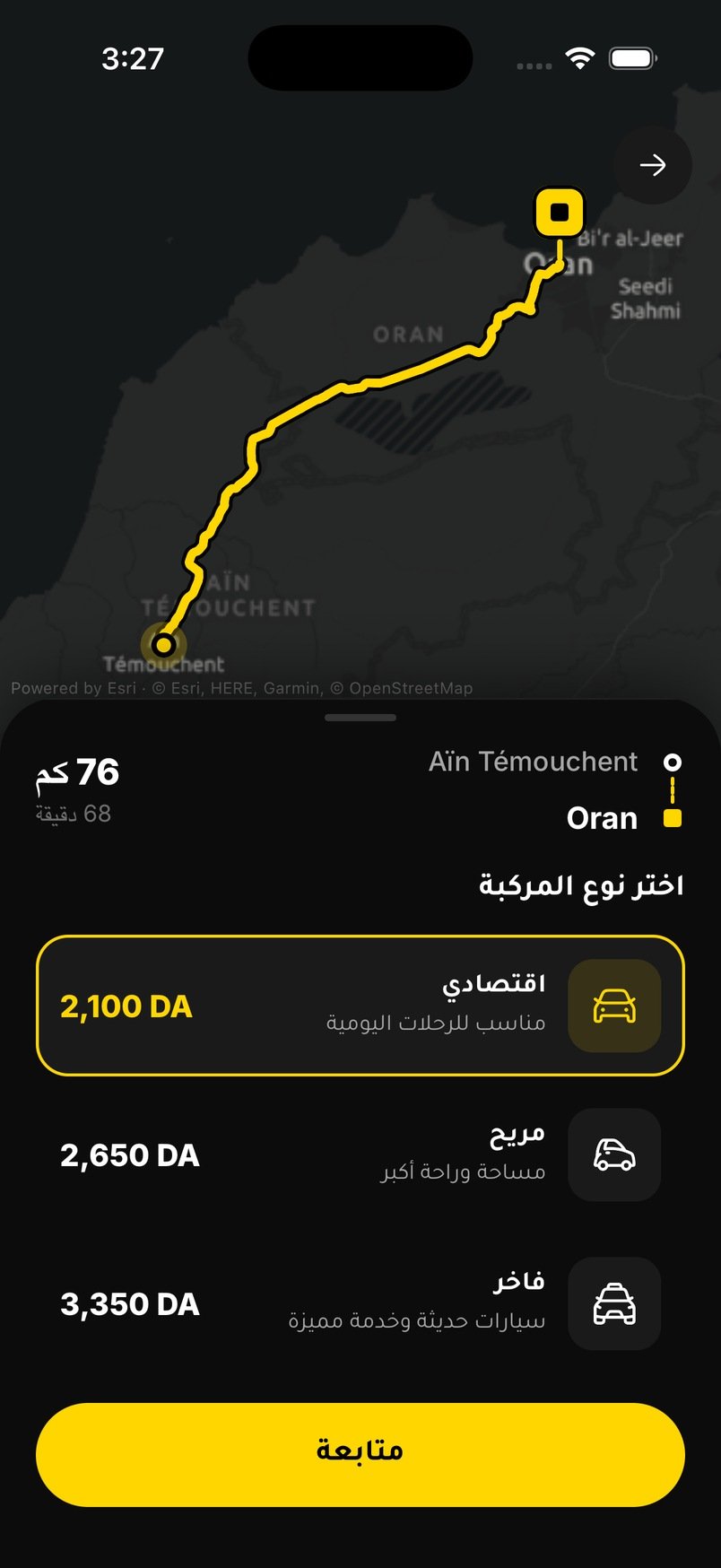
Each option shows a price computed on the server from the road route, the pricing rules for that vehicle and the live balance of requests and free drivers nearby.
- 1Road distance, not a straight lineThe quote function gets the route from OSRM: distance, time and the line drawn on the map.
- 2Rules the client can tuneBase fare, per km (cheaper after 15 km between cities), per minute, minimum fare, night factor and vehicle factor.
- 3Live demandA factor between 1.0 and 1.5 based on open requests against online drivers within about 10 km.
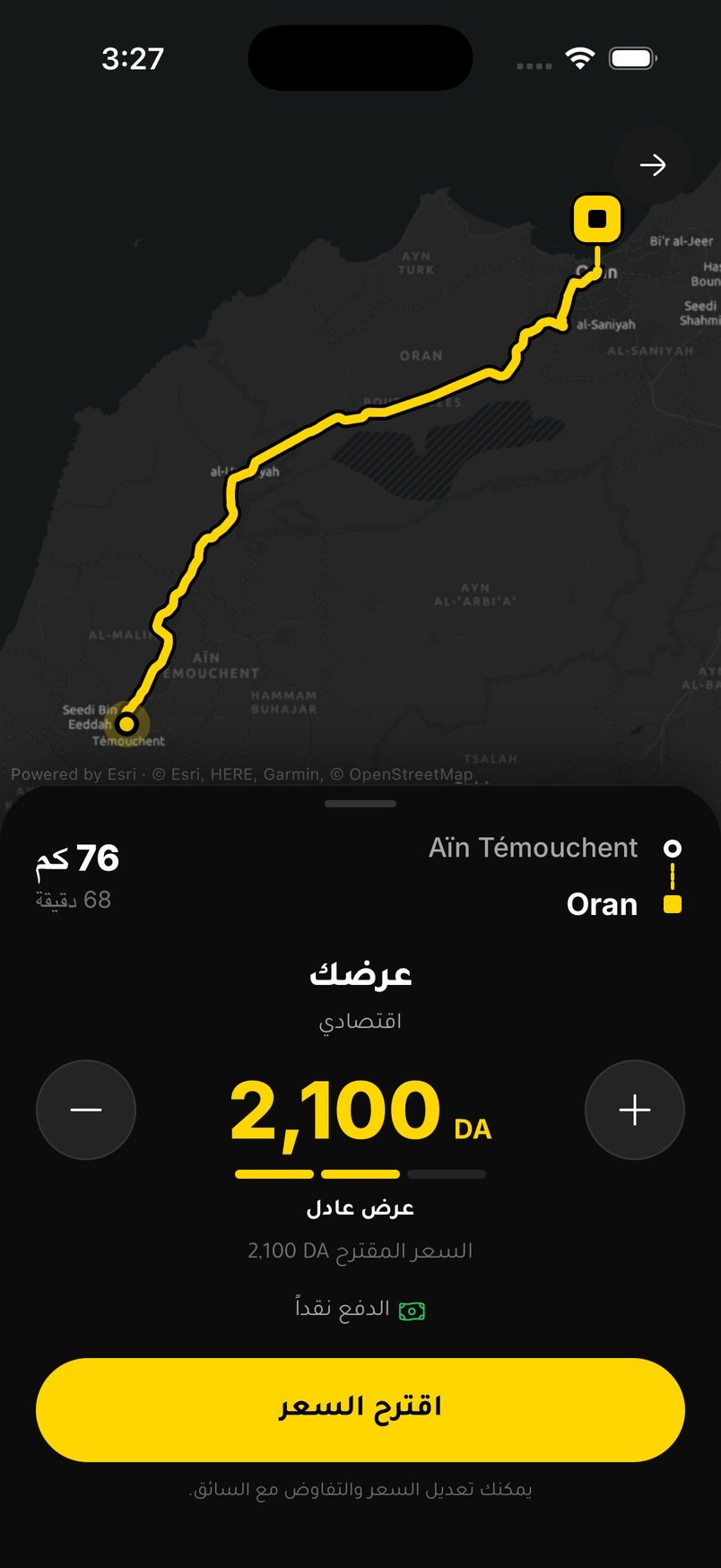
Propose your own price, within a fair range
As in the local market, the client can offer a different price and drivers can counter. The server decides what range is allowed, so the negotiation stays fair to both sides.
- 1Server-issued quotesEvery order must reference a quote that is valid for 20 minutes and can be used once.
- 2A range the app can't stretchOffers outside 70% to 300% of the suggested price, or below the minimum fare, are rejected by the database.
- 3Offers and counter-offers liveDrivers' offers arrive over Supabase Realtime, and the client accepts the one they want.
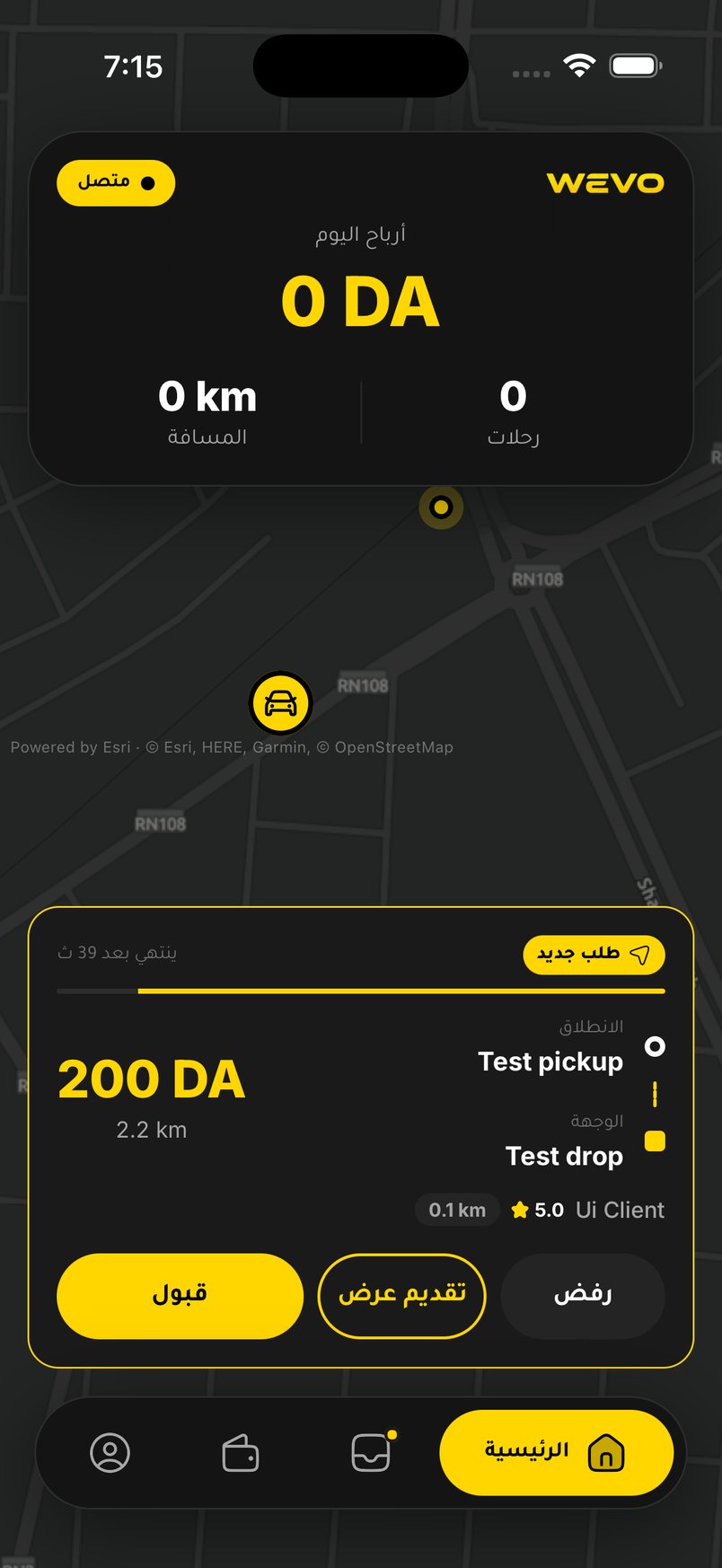
The closest drivers hear about it first
A new request reaches the nearest free drivers in waves. The driver sees the price, the distance and the client's rating, and can accept, reject or send a counter-offer.
- 1Waves of 3, 6, then 12The 3 closest within 3 km for 25 seconds, the 6 closest within 5 km, the 12 closest within 8 km, then everyone within 10 km.
- 2Sound and vibrationA new request rings with WEVO's own alert sound and vibrates, with a notification when the app is in the background.
- 3No stale requestsA request nobody takes within 6 minutes closes by itself and the client can retry with another price.
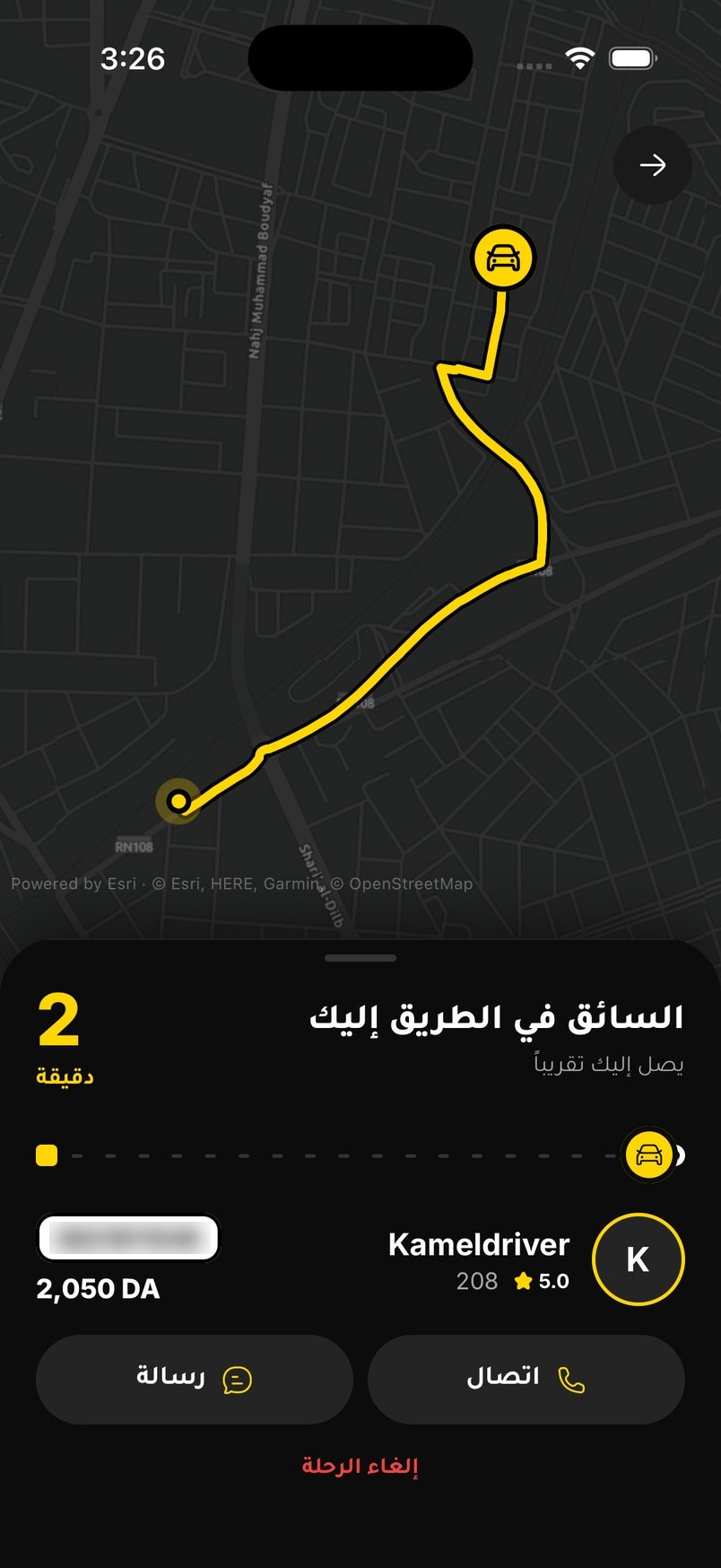
Follow the driver, talk to them in the app
Once matched, the client sees the driver's photo, car and plate, the arrival time and the car moving on the map. Chat and call buttons replace SMS.
- 1Live GPSOnline drivers stream their position every 10 metres moved, at most every 2.5 seconds, with a heartbeat every 45 seconds.
- 2In-app chatClient and driver message each other inside the trip, with a notification for each new message.
- 3Nobody stays stuckEither side can cancel before pickup, and trips whose driver goes silent are closed automatically.
Parcels with proof of delivery
The sender sets a recipient and a destination, and a moto courier picks it up. The courier photographs the parcel at pickup and proves the delivery with a code or a signature.
- 1A secret codeThe recipient gets a 4-digit code that is never sent to the courier. The delivery completes only with the right code.
- 2Photo at pickupThe courier takes a photo of the parcel with the phone camera when collecting it.
- 3Or a signatureWhen the code isn't available, the recipient can sign on the courier's screen.
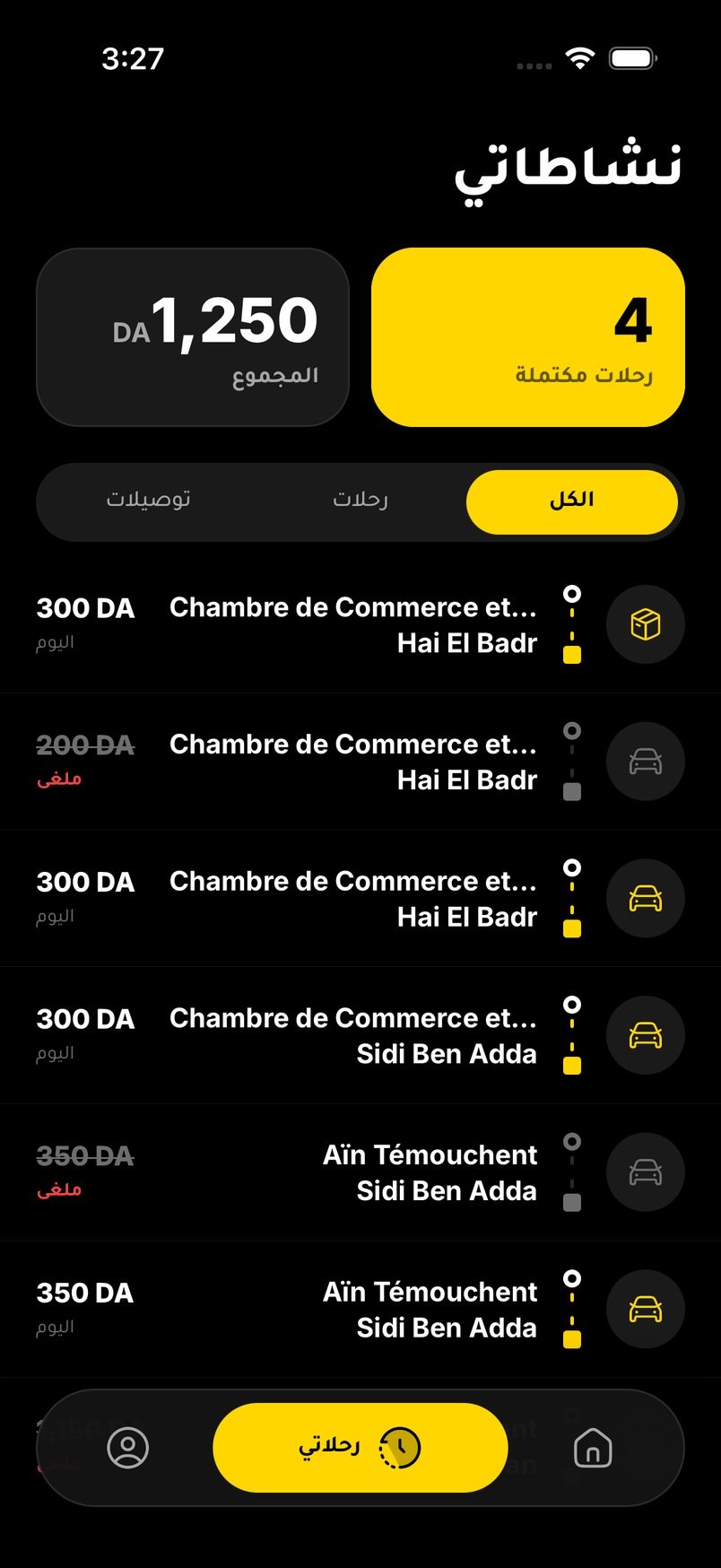
History, ratings and what drivers owe
Clients see every trip and delivery with its price. Drivers see their earnings, and on cash trips the commission they owe WEVO is tracked until it is settled.
- 1Ratings both waysClients rate drivers and drivers rate clients after every trip.
- 2Commission on cash tripsEach cash trip records WEVO's commission, and settlements clear it.
- 3Driver profile requiredDrivers add a photo and the car's model, year and plate before they can go online.
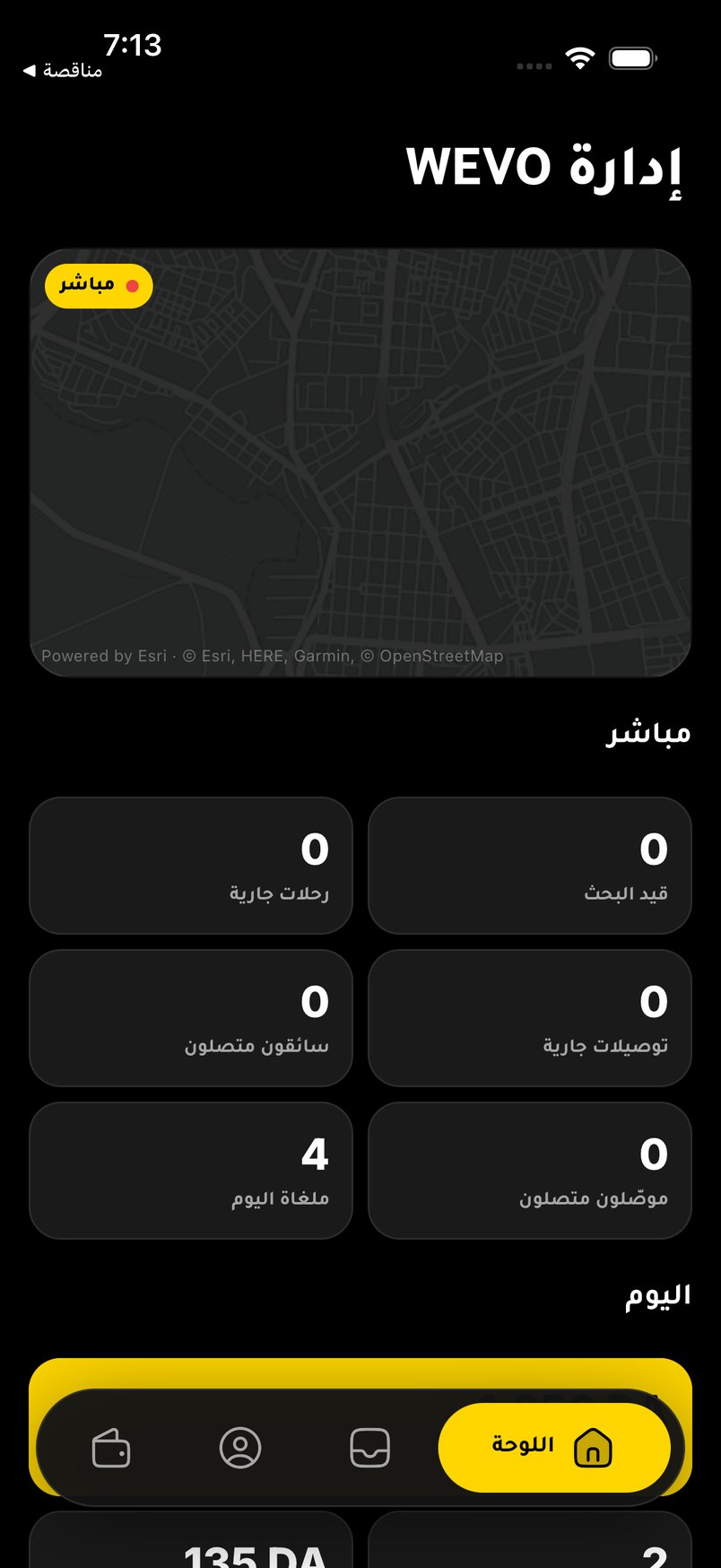
The operator's dashboard, inside the same app
An admin mode gives WEVO's team a live view of the service: trips and deliveries in progress, online drivers, the map, orders, users, finance, prices and settings.
- 1PeopleApprove, ban or delete accounts, and see each person's payments and messages.
- 2PricesPricing rules are edited from the app, without a new release.
- 3One codebaseClient, VTC driver, moto courier and admin are modes of one React Native app.
More screens.
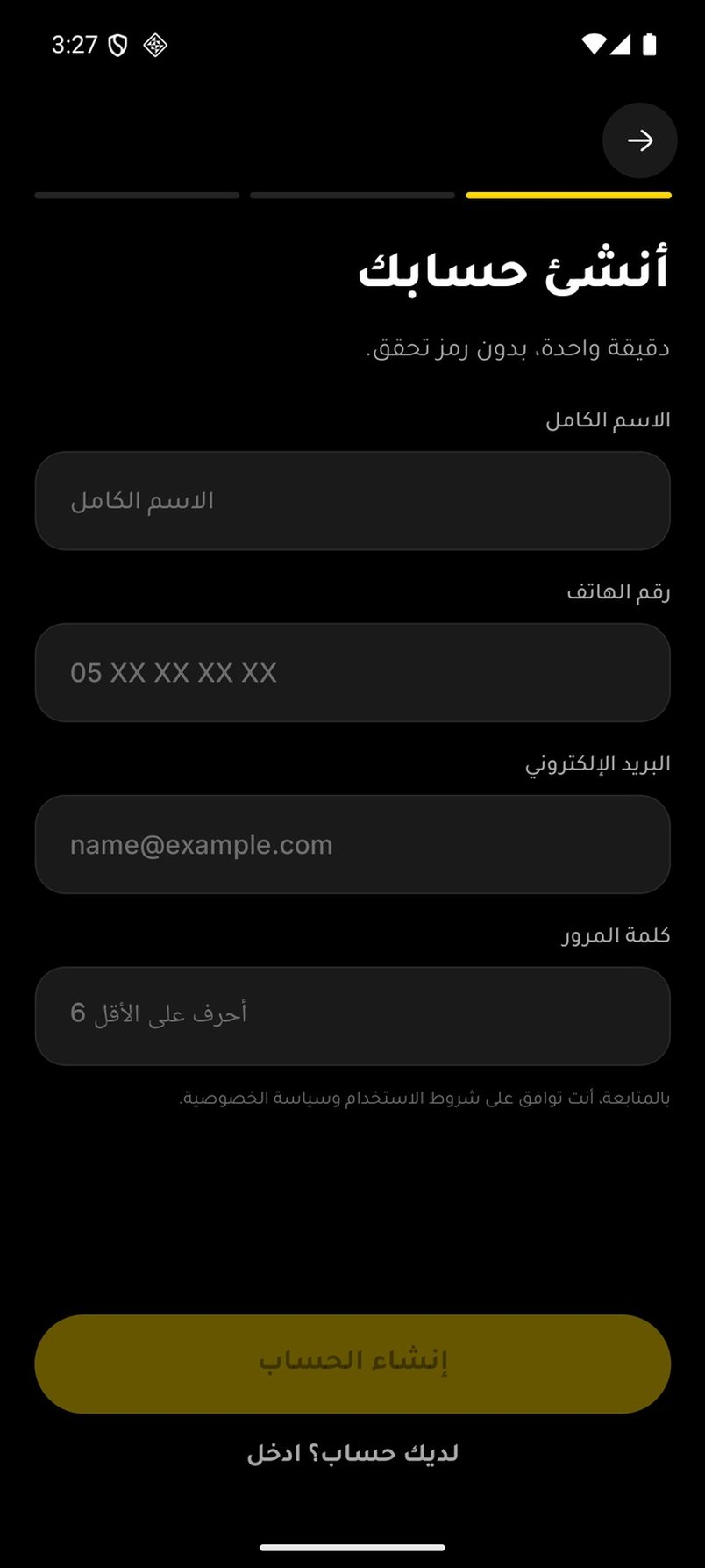
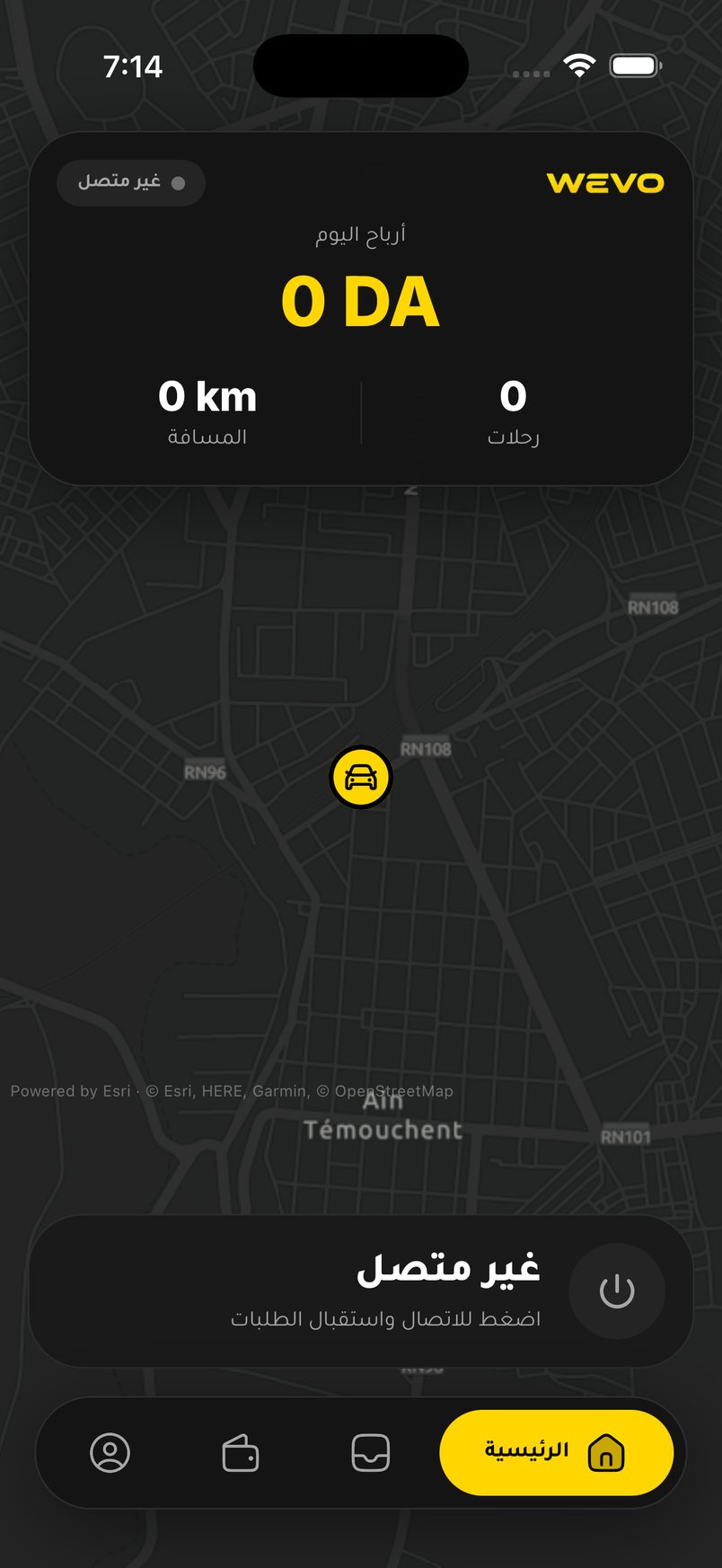
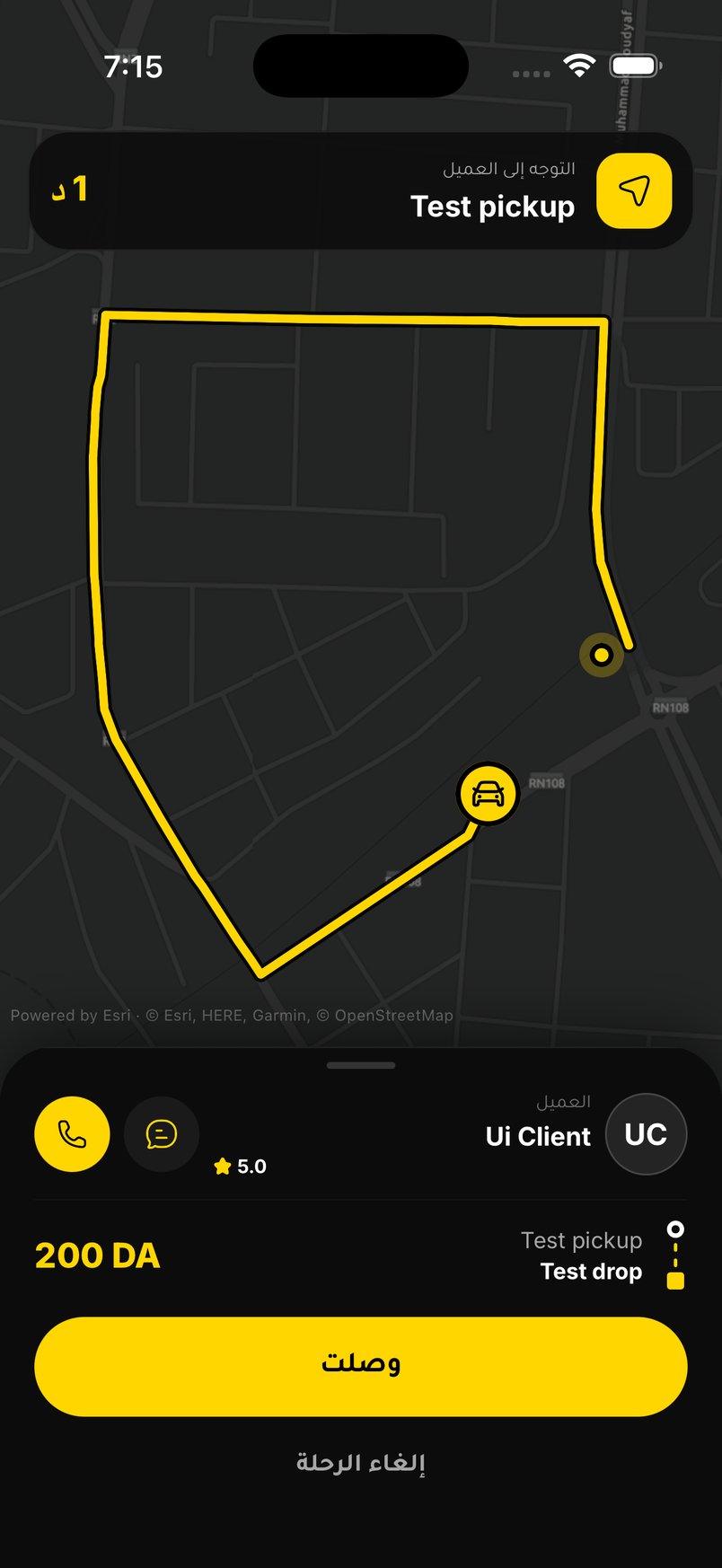
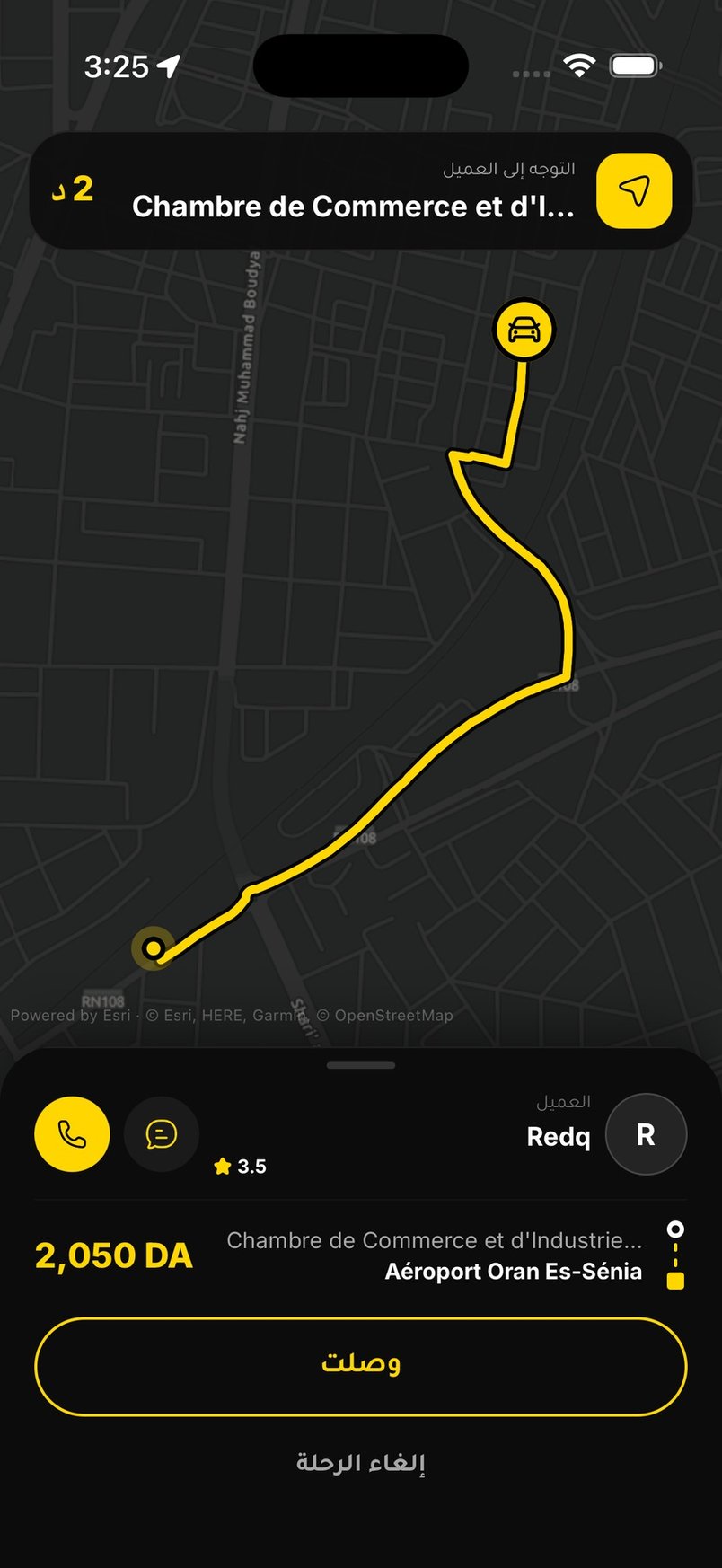
Architecture.
Engineering deep dives.
1. Prices the server agrees to
- Problem
- A price computed on the phone can be changed on the phone. In a negotiated market, both sides need a price the system stands behind.
- Approach
- An Edge Function checks the session, asks OSRM for the road route and calls issue_quote(), which applies the pricing rules and live demand. The quote is valid for 20 minutes and single use. An order must reference it: the server copies distance, duration and route from the quote and rejects prices outside the allowed range with BAD_PRICE, QUOTE_EXPIRED or QUOTE_INVALID.
- Trade-off
- The public OSRM server is for development only. When it fails, the function falls back to a straight-line estimate flagged routed: false, and a production router is still to be set up.
2. Closest drivers first, enforced by the database
- Problem
- Sending every request to every driver floods the city and rewards whoever taps fastest, not whoever is closest.
- Approach
- A driver can see a searching request only if they are online, have the right vehicle, sent GPS in the last 3 minutes, are free, and fall inside the current wave. That rule lives in a row-level security function, private.driver_can_see, and make_offer rejects anyone outside it with OUT_OF_RANGE. A pg_cron job every 30 seconds widens the wave and pushes the drivers who just entered it.
- Trade-off
- Drivers' feeds re-read every 10 seconds to see the next wave, which costs some requests compared with a pure push design.
3. A trip is a state machine in Postgres
- Problem
- A ride touches two people's data: the client's order and the driver's status. Letting the app write those rows directly invites race conditions and cheating.
- Approach
- Plain table writes are allowed only on your own rows. Every step that touches someone else's data (offer, accept, arrive, start, finish, cancel, rate) goes through a checked database function that validates the current state first. A SQL test file runs 39 checks over the whole order flow.
- Trade-off
- More logic lives in SQL than in TypeScript, which is harder to debug, but it is the one place both apps can't bypass.
4. GPS that keeps working with the screen off
- Problem
- A driver puts the phone in a holder and locks it. Android kills background apps, and a driver who stops sending positions disappears from matching.
- Approach
- On Android, a foreground service with a persistent notification keeps the position stream and the session token alive while the driver is online. Positions are throttled by distance and time, going online without a GPS fix fails with NO_GPS, and a server job sets drivers offline after 10 minutes of silence and closes trips that never started.
- Trade-off
- iOS background location is not done yet, so on iPhone the driver app must stay open.
5. Maps without a big monthly bill
- Problem
- A ride app draws maps all day. Paying per map load before launch would cost more than the client's budget allowed.
- Approach
- The app draws Esri's licensed dark-gray basemap tiles, styled to WEVO black, with labels in the app's language. The 512 px tiles are drawn one zoom level lower, so labels stay normal size and each screen needs four times fewer tiles, inside the free tier of two million tiles a month. Place search is cached in Postgres for seven days.
- Trade-off
- Place search uses the public Photon server, which is fair use with no guarantee. A self-hosted geocoder is on the launch list.
6. A native crash on startup, traced and pinned
- Problem
- The app crashed at startup with a segmentation fault deep in React Native's component registry, before any of its own code ran.
- Approach
- The cause was react-native-maps 1.26 compiling its native code without React Native's RN_SERIALIZABLE_STATE flag, which corrupted the props layout in the new architecture. Pinning React Native 0.85.3 with react-native-maps 1.29.8 or newer fixed it, and the README warns against downgrading.
- Trade-off
- Pinned versions mean upgrades need care and a test build each time.
What’s next.
Where it stands
The client, driver and courier flows work end to end on the real backend, and an Android beta build is ready, with a tester guide in Arabic. Push notifications are built and wait for the client's Firebase project. iOS background GPS and the Play Store release are still to do.
Before launch
Driver documents with admin approval, self-hosted routing and place search, Supabase Pro with daily backups, terms and privacy policy in Arabic and French, crash reporting, and testing on a range of real Android phones.