I’m a solo founder. Here’s how I hand the work to an AI team without losing control.
How I run my businesses mostly alone: one brief to an AI manager, a team of specialists with real tools, a source for every claim, and nothing sent without my approval. What VYNORO does, what I still do myself, and who it is for.
 Reda Bellassery·
·6 min read

Key takeaways
- The hard part of running a business alone isn’t any single task. It’s that research, prospects, audits, first messages and reports all land on one person.
- More AI chats didn’t fix it for me. Each tool was brilliant, but none of them knew my business or each other, so I became the copy-paste between them.
- So I built VYNORO: you describe your business once, and Vyn, an AI manager, plans each job and hands the steps to specialists with real tools.
- Three rules make the handoff safe: every claim links to a source, every mission has a budget, and nothing is sent until I approve it.
- It doesn’t replace the founder. It does the groundwork, so my time goes to the parts only I can do: deciding, selling and talking to people.
I run more than one business. Every month I pay for Claude Max and for ChatGPT Plus, two of the best AI tools on earth, and they’re on my screen all day.
And for a long time I still had one problem money couldn’t fix: tabs.
One chat held my marketing plan. Another had the outreach sequence. A third knew which emails went out last week. A fourth had audited a client’s website. By Thursday I couldn’t find the chat where I’d explained my own business, so I explained it again, in a new tab.
This post is about how I got out of that. If you’re a solo founder or you run a small agency, it’s for you. If you’d rather build something like this yourself, I wrote a second post about how I built it.
What does a solo founder actually do all week?
Everything. That’s the honest answer, and it’s the whole problem. Here’s a normal week for me, and for most of the agency owners I talk to:
- Research. Who the market is, what competitors charge, what changed this month.
- Finding customers. A list of businesses that could actually use what you sell.
- Auditing. Their websites: speed, mobile, what’s missing, what’s broken.
- First messages. Writing to each one about something real, not a template.
- Reports. Turning all of that into something a client can read.
- Content. Posts, pages and replies, so people know you exist.
- Follow-ups and admin. The work nobody sees and everybody notices when it’s late.
None of these jobs is hard on its own. The problem is that there’s one of you. Every hour spent building a prospect list is an hour you’re not selling, and selling is the one job nobody can do for you.
Why more ChatGPT tabs didn’t fix it
I’m not against chatbots. I use them every day and I build with them for a living. But for running a business I kept hitting the same three walls:
- They don’t know each other. The research chat doesn’t hand anything to the writing chat. I did. The one doing the copy-paste between all of them, every single day, was me.
- They forget your business. Every new tab starts from zero, so you explain your prices, your tone and your clients again and again.
- Nobody checks the answer. A chatbot will happily give you an email address that looks right and doesn’t exist, or a page speed nobody measured. If that reaches a client, it’s your name on it.
Each tool is brilliant. None of them know each other. And the glue between them was me.
What I wanted instead: a team, not another chat
I’m a developer, so I did what developers do when something annoys them enough. I built the thing I wanted. It’s called VYNORO.
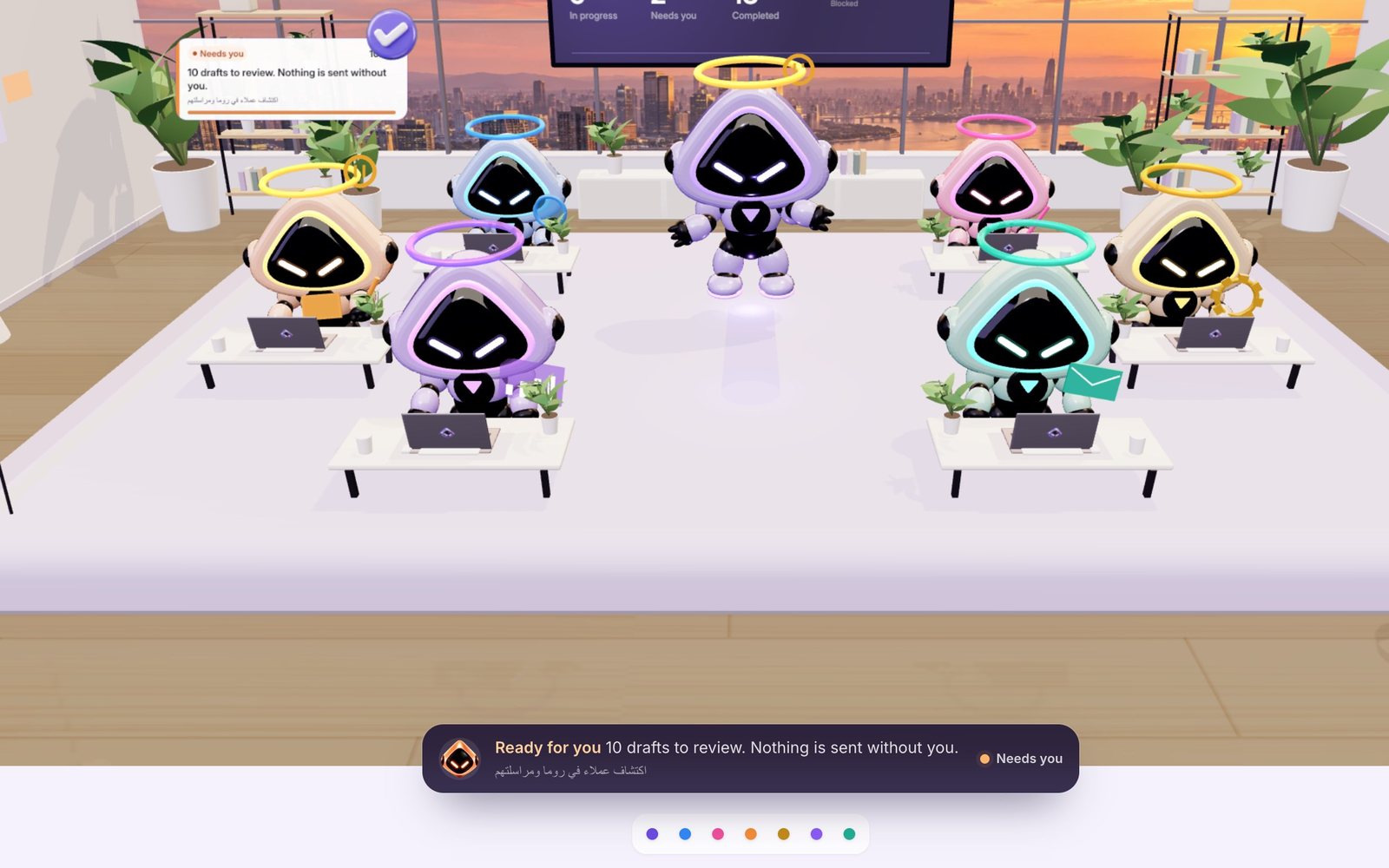
VYNORO is an AI workforce for founders and small agencies. It’s a team of AI specialists, led by an AI manager called Vyn, that does research, audits, reports and first drafts, and shows a source for every claim. The idea is simple:
- You describe your business once. What you sell, your prices, your tone, your region. It lives in a profile the whole team reads, so the work sounds like you.
- You talk to one manager. Vyn, the AI chief of staff, reads your request and decides in about a second: answer it now, ask you one question, or plan the job.
- A team does the work together. There’s a Researcher, an Analyst, a Writer, a Designer, an Outreach specialist and Operations. Each one has real tools, for example web search, Google Maps and PageSpeed, and hands its output to the next.
- Everything lands on one page. The plan, the work, the sources and the drafts. No tabs.
What handing off a task looks like
Here’s a real mission from my own workspace. I run a small web agency, Barmjli, and I wanted new clients in Italy. So I wrote one sentence: find restaurants in Milan with weak websites and draft a first message for each.
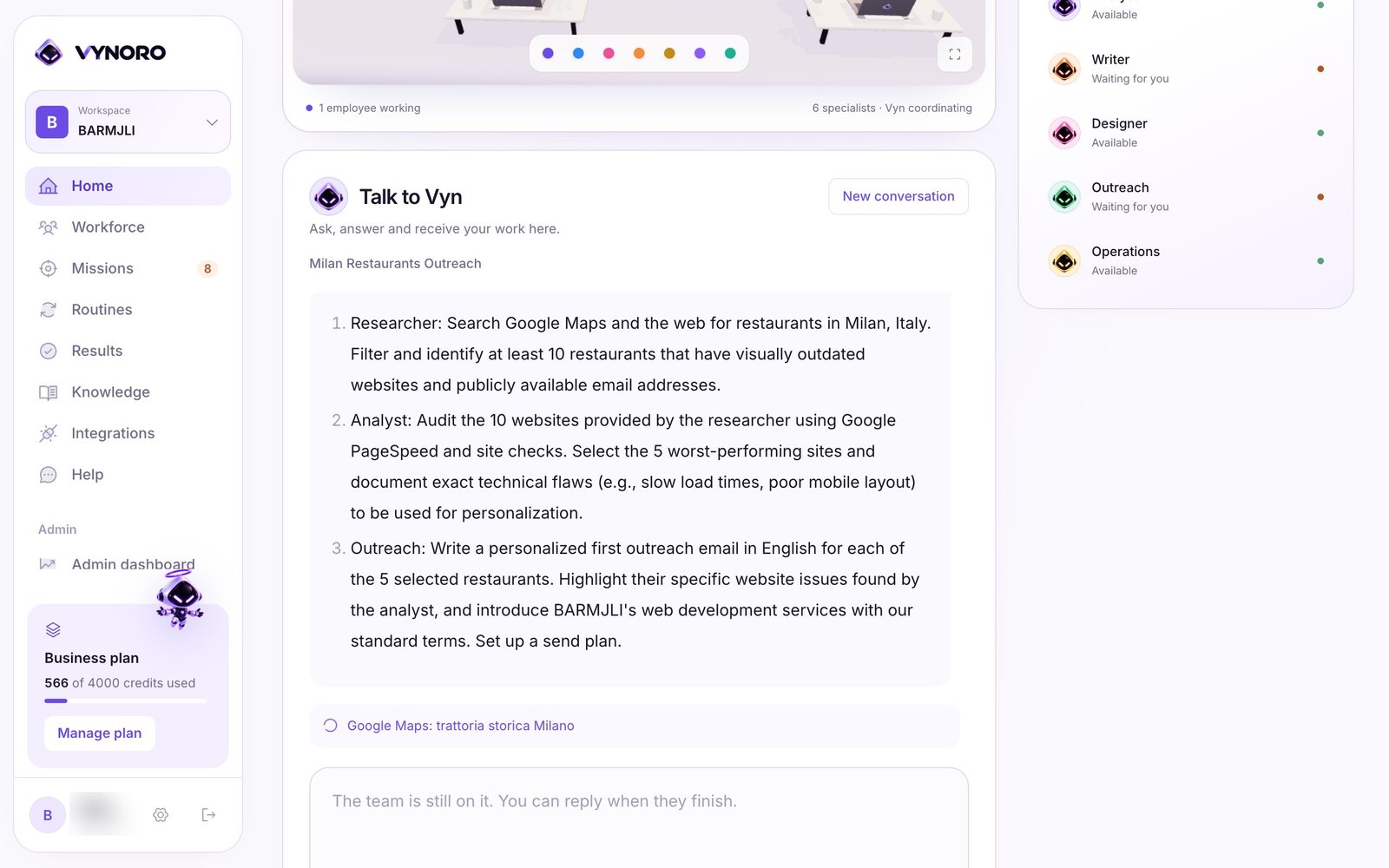
- Vyn plans the job.It decided the request needed a plan, split it into research, audit and outreach, and named what each step must hand to the next.
- The Researcher finds candidates.It searched Google Maps and the web and read the restaurants’ pages. Every page it opened became evidence with an ID.
- The Analyst measures.It ran real checks on each site, so “slow website” is a measured number, not a guess. Steps whose inputs are ready run in parallel, up to three at a time.
- Code checks, then Vyn reviews.Before Vyn sees anything, code confirms every email appeared on a page the team actually opened and every number exists in the evidence. Then Vyn accepts the work, sends it back, or asks me.
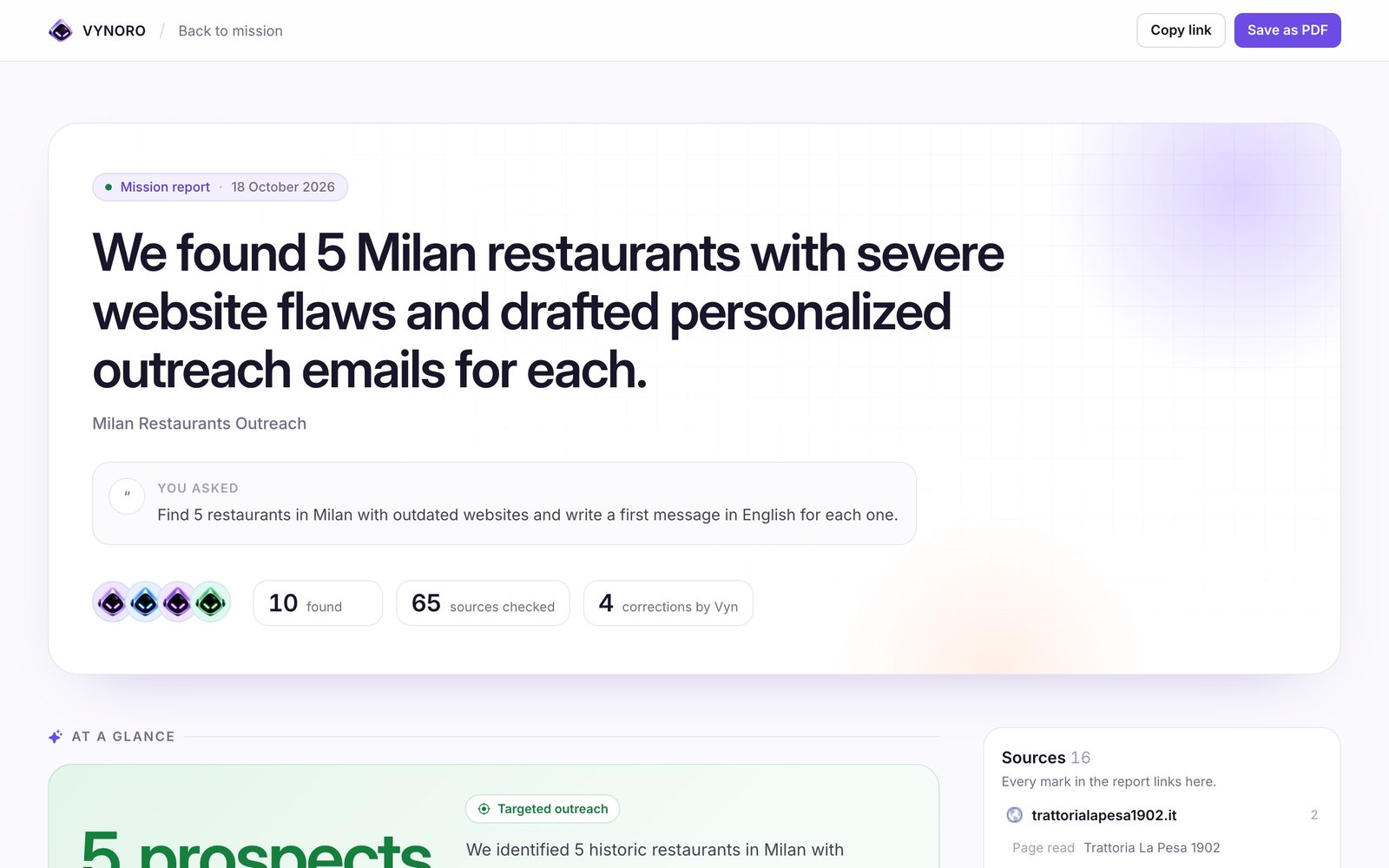
- I get a report and drafts.A report where every claim links to its source, and a first message for each restaurant, tied to the flaw found on its own site.
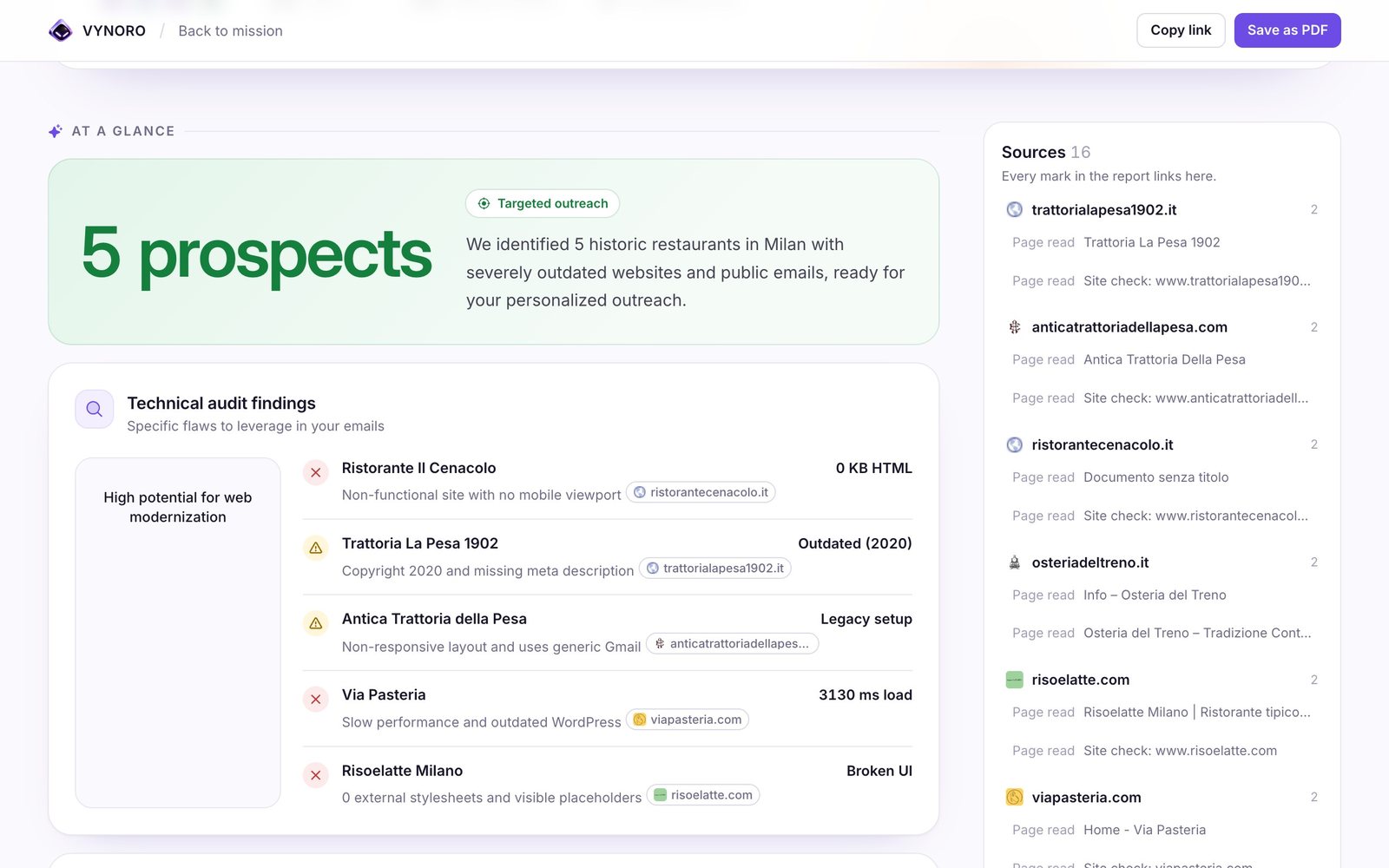
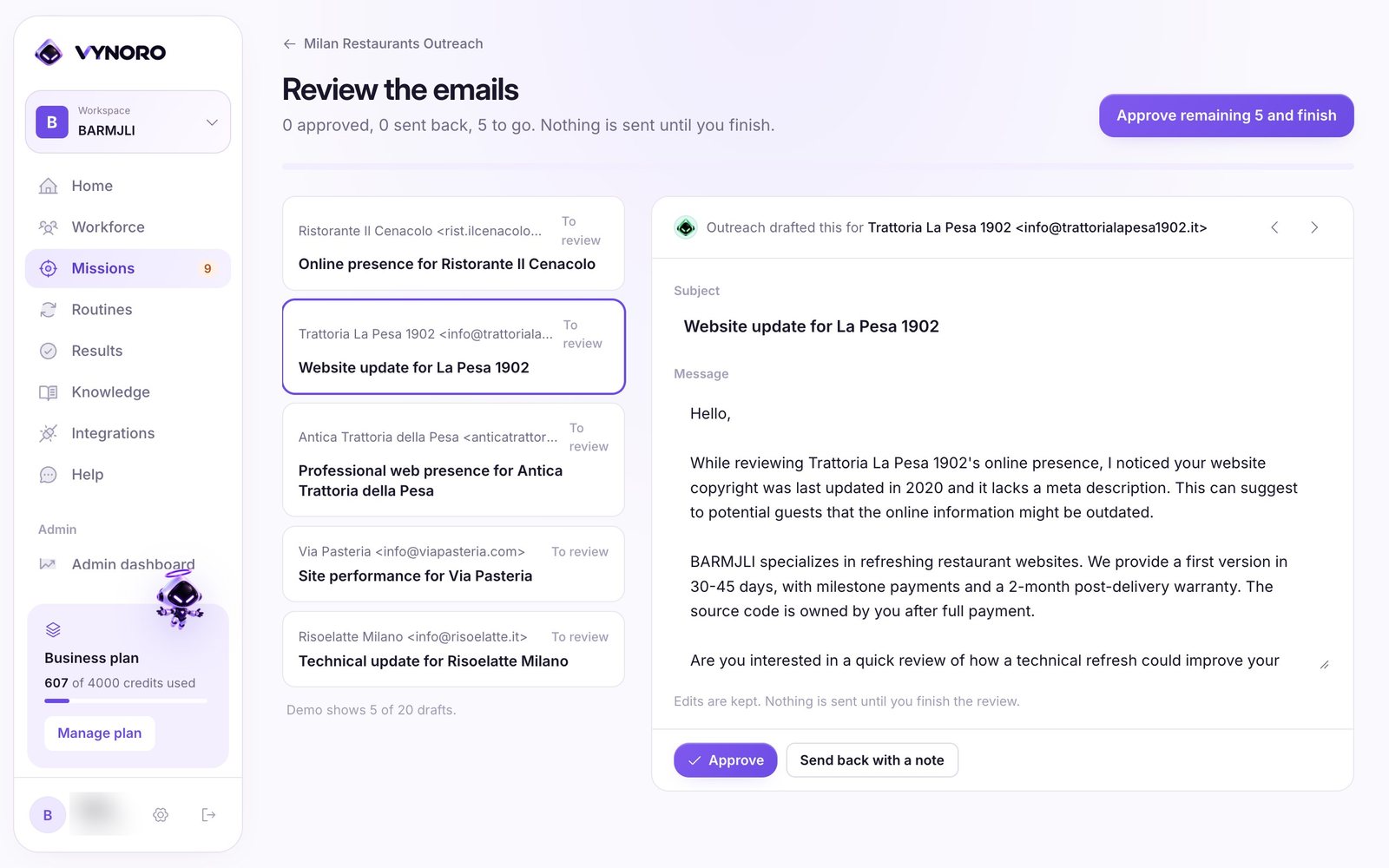
My part took a few minutes: read the drafts, fix a line in one, approve the rest. The team did the groundwork. I did the part with my name on it.
The three rules I don’t break
Outreach only drafts. Drafts wait in a review queue, and nothing leaves until I finish the review. When I edit or reject one with a note, it becomes a short lesson the team uses next time, for example how I sign my emails.
Every page read, Maps search and site check gets an evidence ID, and the report has to cite it. A number that isn’t in the evidence is dropped before I ever see it.
Agents that loop with tools can burn money quietly. Every AI call is logged with its cost, and a mission starts with a 1 USD budget that pauses at the limit until I say continue.
These aren’t settings I switched on. They are the product. I’d rather spend three minutes reviewing than send a restaurant owner a wrong detail with my agency’s name on it.
What I still do myself
People ask whether this replaces employees. It doesn’t, and I don’t want it to. Here’s how the work splits for me now:
| The team does | I do |
|---|---|
| Finds and qualifies prospects | Decide which market to go after |
| Audits websites and measures the problems | Choose what to offer, and at what price |
| Drafts first messages and follow-ups | Edit, approve and send |
| Writes reports with sources | Talk to the client |
| Runs the same brief again next week, on a schedule | Build the relationship |
You’re still the founder. You’re just not doing it alone anymore.
Who VYNORO is for, and who it isn’t
It’s for founders and small agencies of one to ten people where the owner still sells. Think web, design, marketing and SEO studios, consultants, and anyone whose week looks like the list at the top of this post.
It isn’t for you if you want something that runs on autopilot or blasts a thousand cold emails. VYNORO doesn’t send anything on its own, by design.
It also isn’t English-only. Agents write in the language of the request. I run part of my own work in Arabic, with the report laid out right to left.
Where it stands, honestly
I built VYNORO alone and launched it on Product Hunt in October 2026, starting from zero users. I’m not going to tell you it’s perfect. I use it for my own agency first, and every rule above came from something that went wrong in my own work.
If you run a small business and want to hand off the groundwork, try VYNORO. And if you do, tell me what’s wrong with it. That’s the most useful thing you can send me.
About the screenshots: every image in this post comes from my own VYNORO workspace for Barmjli, running real missions on public data.
Questions people ask
What is VYNORO?
Does VYNORO send emails on its own?
How is it different from using ChatGPT or Claude?
How does it avoid made-up facts?
Can it replace an employee?
I build AI agents, web apps and mobile apps for businesses, and I run my own agency, Barmjli. I write here about what I build and what it taught me.